The open record for glass
Every piece has a story.
Give it one that lasts.
A shared, open registry for glass — the makers, the studios, the objects, and the opportunities that move the field forward.
Corrected, argued over, and grown by the people who use it. Data under CC BY 4.0; the software is Apache 2.0.
Open data
See the whole field, then take it with you.
Browse and filter the registry, pull it through a read-only API, or explore how makers, mentors, techniques, and studios connect.
Explore
Filterable tables of artists, studios, objects, and more — export any view.
Open the explorer →Developer API
A read-only, self-documenting API. Try /api/datasets.
Studios worldwide
Every studio on a dark world map — filter by type, search by city or country.
Open the map →Relationship graph
Artists, mentors, techniques, and studios as a living network you can explore.
Open the graph →Opportunities
Every deadline in one calendar.
Open calls, residencies, and grants — the chances to make new work somewhere new. Browse them as a month calendar, or subscribe once so new approved listings land in your own calendar automatically.
Community boards
Buy, sell, trade, and hire.
List work to sell, want, or trade — with a place for makers who'll swap rather than sell.
Gaffer, assistant, teaching, and studio-tech openings across the field.
Suppliers, equipment, and the shared know-how that keeps a shop running.
Provenance
From the hot shop to the archive.
The making is live and fleeting; the record shouldn't be. Glowtbook is a working bench journal and object registry — log a piece, photograph it off the pipe, and record where it's been. Installs as an app on your phone.
What travels with a piece
- A preservation-grade archive of the originals (BagIt / OAIS)
- Content Credentials (C2PA) signed into the image
- A re-identification fingerprint to confirm a physical piece later
- Structured style traits aligned to Getty AAT & Wikidata
- A listing built to be screen-reader accessible from the start
Experimental
A digital barcode for one-of-a-kind glass.
Every mass-produced thing has a barcode; a handmade piece has none — so it can't be told from a copy, or reunited with its record if it's sold, lent, or lost. Shoot a piece from every angle on a printed mat and the app turns it into a fingerprint unique to that physical object — a barcode you don't print, you read off the glass. Anyone can later confirm this is the same piece, in a browser.
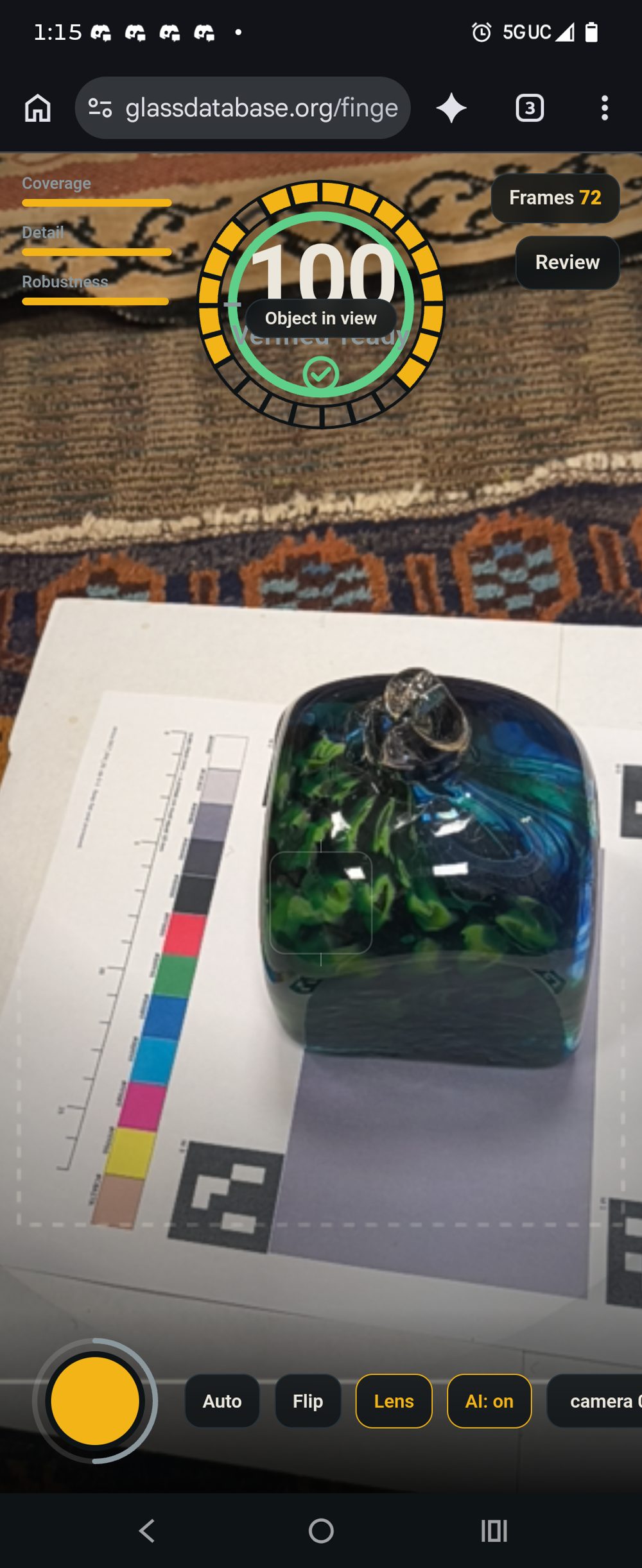
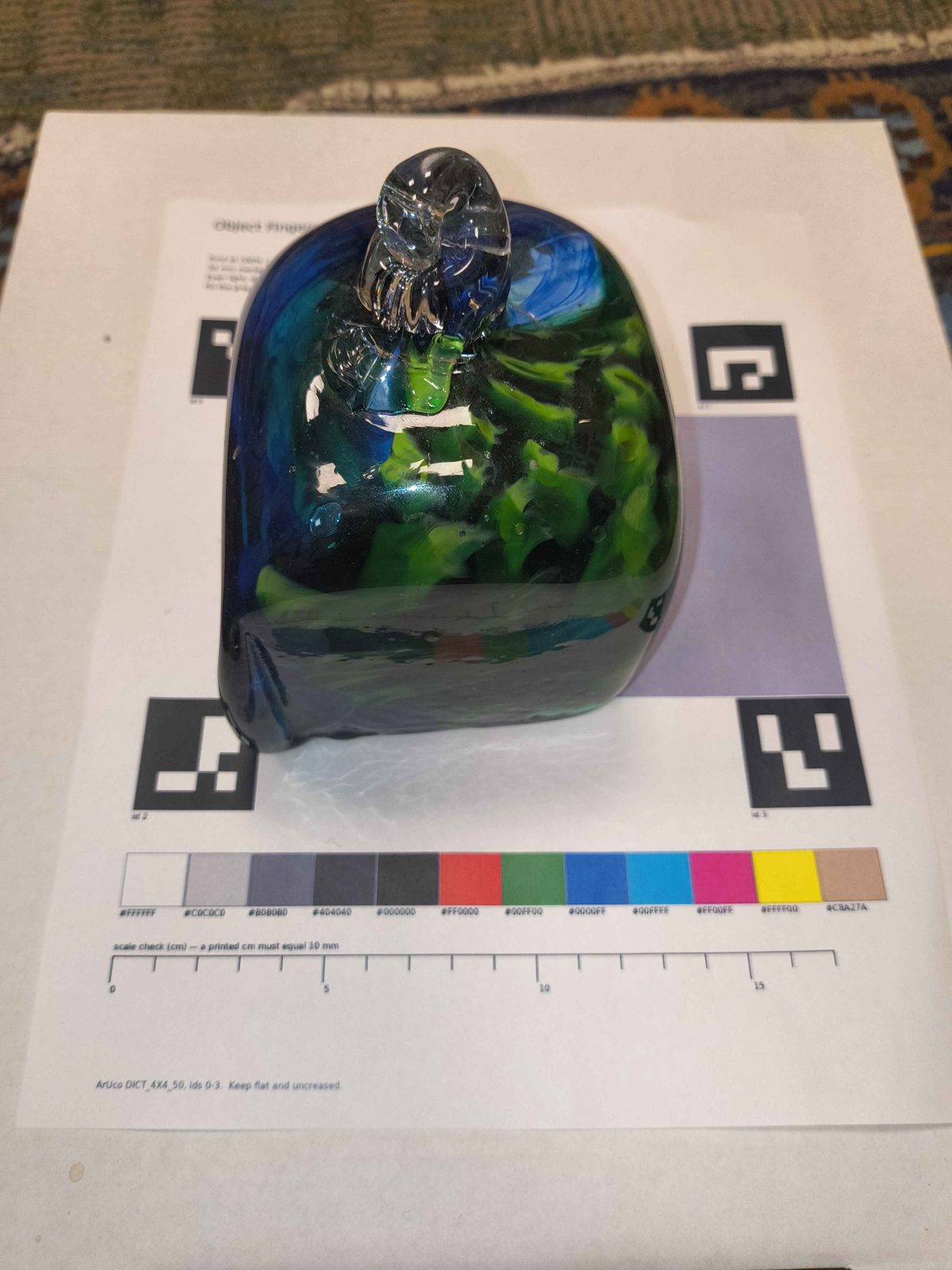
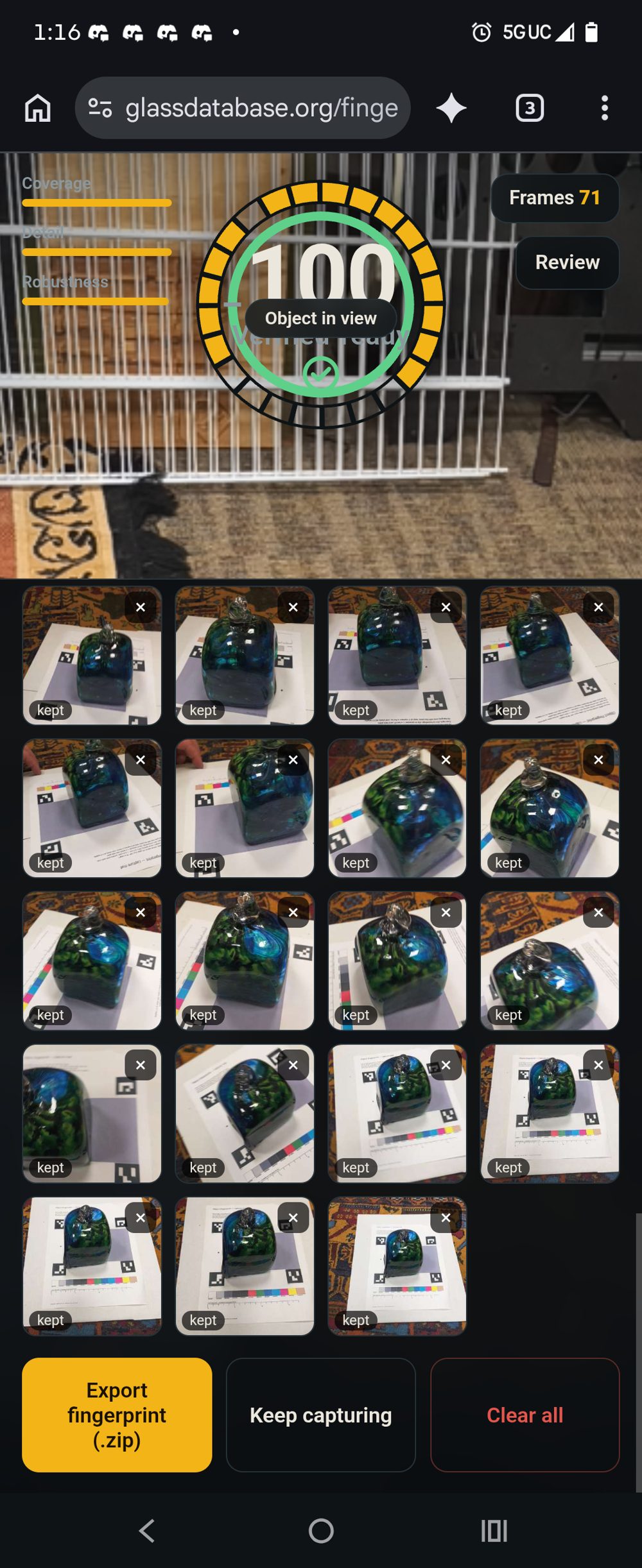
Fingerprint
Verify
The barcode is bound to tamper-evident provenance — a compact attestation, signed into the piece's C2PA Content Credentials — so a verified match isn't just "looks alike"; it's anchored to a signed record of what the piece is and when it was enrolled. This is experimental: it works today for enrol and verify, and it's strongest on pieces with distinctive colour and detail. Treat a result as strong evidence, not forensic proof.
Open shop documentation
Describe a shop through its components.
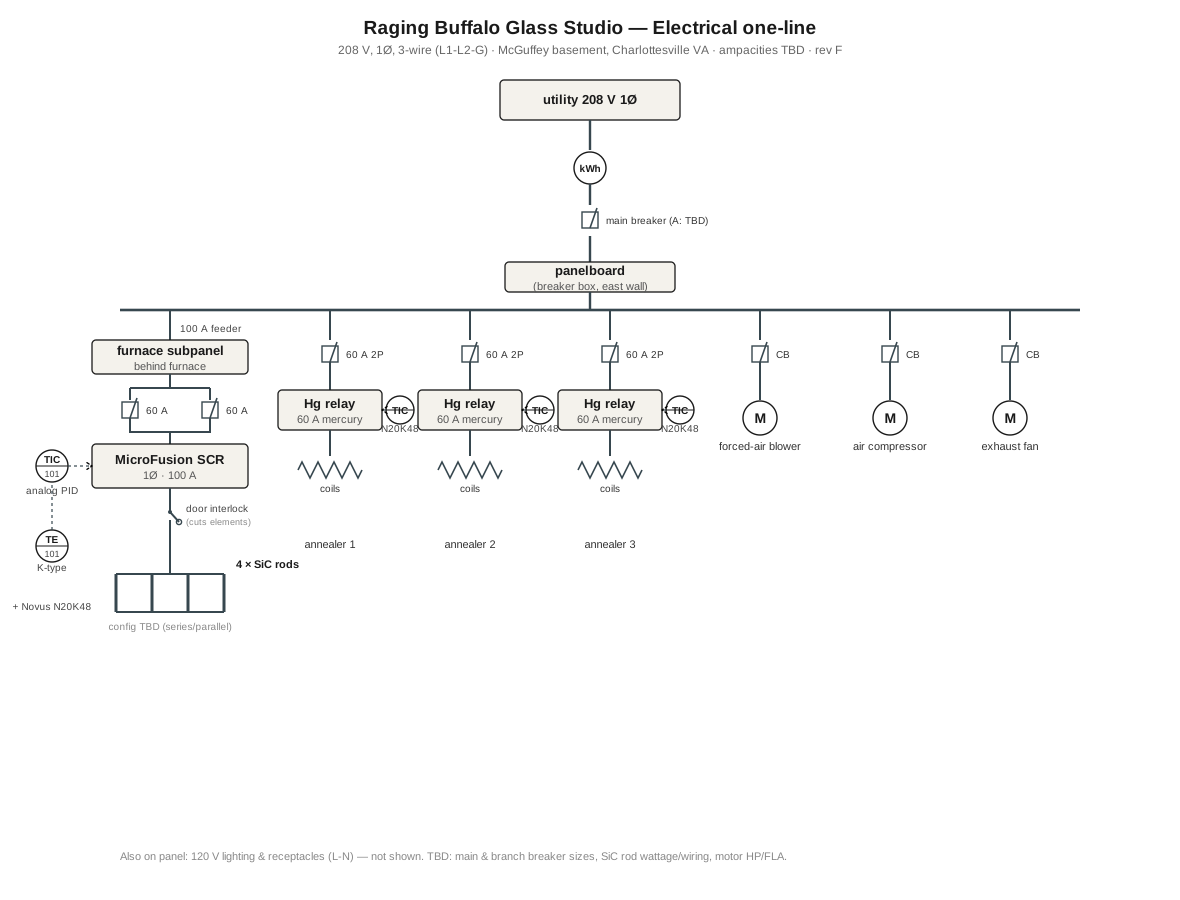
A hot shop is a system — gas, air, power, heat, exhaust, and the controls that tie it together. Document yours as diagrams and a bill of materials with real part numbers so the next person can fix, order, or build one. Describe it to an AI, have it render the diagrams, and publish it here.
Come say hi
A record kept by the field, for the field.
Get open calls and new features in your inbox, join the conversation, or follow along. Nothing is published until it's reviewed; anything can be corrected or removed on request.